Predicting Chronic Kidney Disease Progression
Using Machine Learning and Deep Learning.
A Case Study at Srinagarind Hospital.


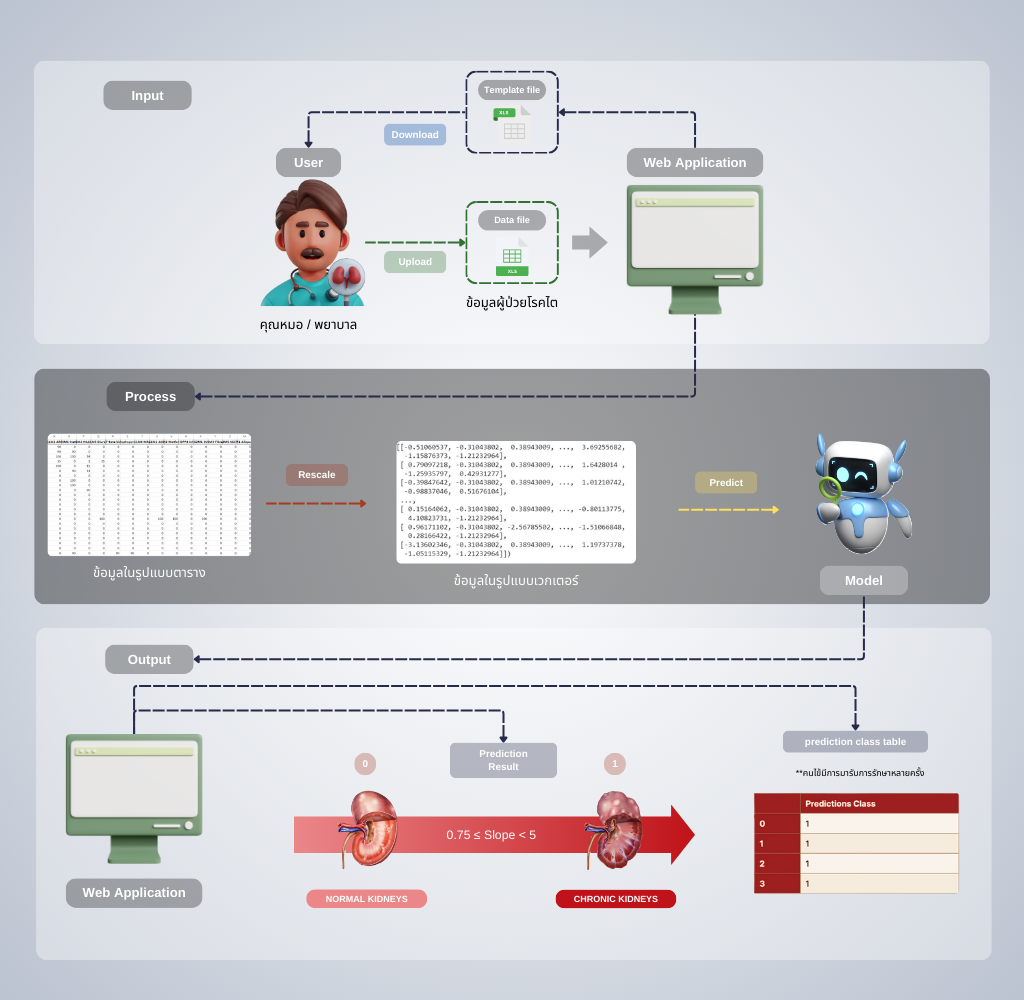
WebApp(Prototype)
Process
Abstract
The health condition known as chronic kidney disease (CKD) is defined by
the kidneys' inability to remove waste and fluids from the blood,
which can result in a potentially hazardous buildup of waste materials.
This study focuses on constructing and assessing
the efficiency of models for forecasting the pace of change in kidney filtration rates.
Finding the best model to determine risk factors and forecasting when the disease may manifest or worsen.
With the advancements in current technology, Artificial Intelligence (AI)
is becoming increasingly important in medical data processing
to improve diagnostic accuracy as a result of technological improvements.
Because machine learning (ML) approaches are versatile in creating models, they are used in this situation.
Recognizing the significance of CKD scenarios,
the study proposes the application of AI to medical data from CKD patients at Srinagarind Hospital.
The objective is to create and compare models predicting the change in estimated glomerular filtration rate (eGFR)
to identify the most efficient model for guiding suitable treatment approaches for individual CKD patients.
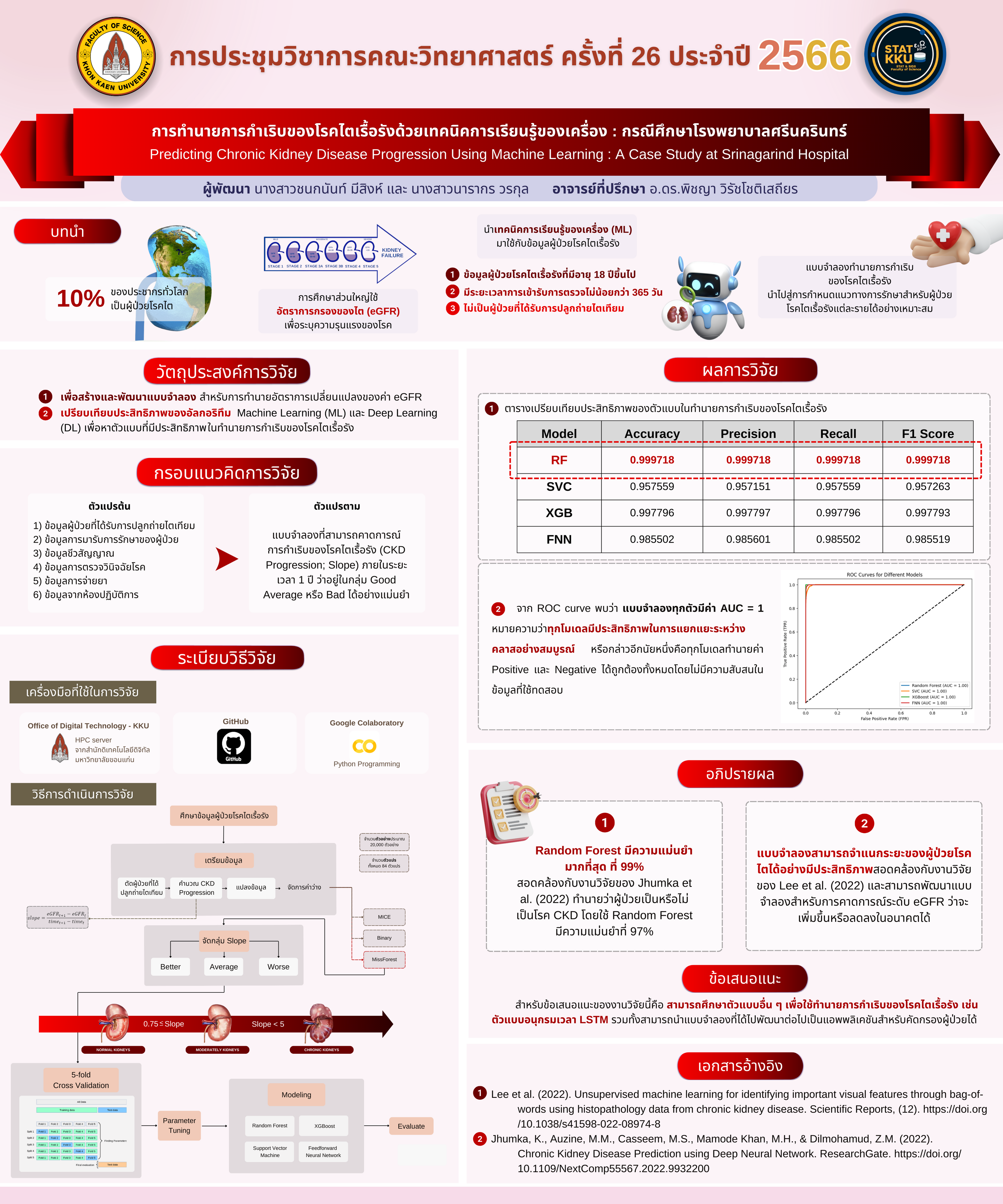
Project poster
The website template was borrowed from Michaël Gharbi.